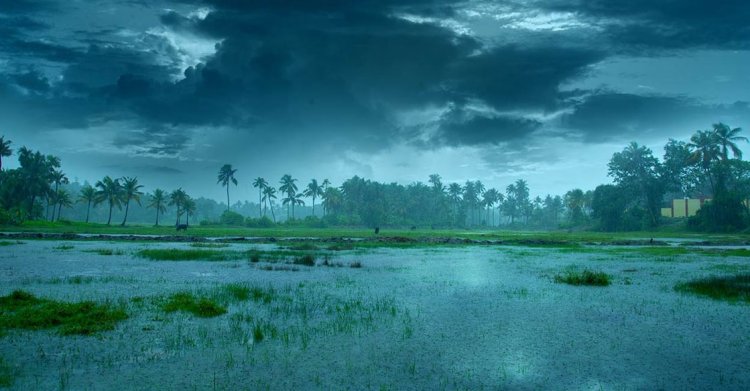
The monsoon is vital to India’s agricultural industry, which sustains the livelihood of roughly 42 per cent of the population and adds 18.2 per cent to the GDP of India. It is also vital for filling up reservoirs essential for drinking and generating power throughout the country.
The southwest monsoon struck Kerala on Saturday, its earliest onset over the Indian mainland after 2009, with the India Meteorological Department (IMD) reporting that the rains reached the southern coast eight days ahead of time, bringing relief from a debilitating heat wave and hopes for a bountiful harvest.
Typically, the southwest monsoon makes its beginning over Kerala by June 1 and envelops the whole nation by July 8. It begins to retreat from northwest India by September 17 and recedes by October 15. The monsoon arrived over the southern state on May 30 last year; June 8 in 2023; May 29 in 2022; June 3 in 2021; June 1 in 2020; June 8 in 2019; and May 29 in 2018, IMD data indicated.
Since 1975, data indicated that the monsoon had arrived in Kerala the earliest in 1990 (on May 19), 13 days ahead of the normal date. There is no direct correlation between the onset date and the cumulative rainfall over the country as a whole during the season, according to meteorologists.
Whether or not the monsoon comes early or late in Kerala does not imply that it will sweep across other regions of the country likewise. It is dominated by large-scale variabilities and global, regional and local characteristics, an official at IMD said.