

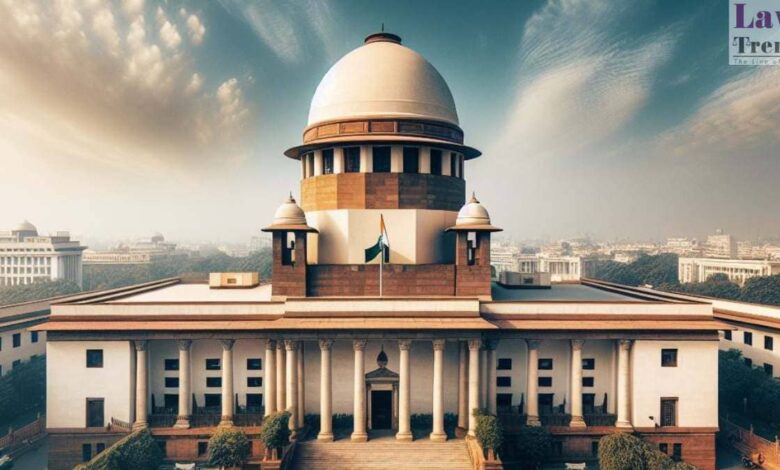
In the wake of a landmark Supreme Court order imposing a time limit on the President and Governors for signing Bills, Vice-President Jagdeep Dhankhar has made a strong expression of reservations about judicial overreach. He stated the current situation cannot allow the courts to direct the President, and quoted how Article 142 of the Constitution granting special powers to the Supreme Court has turned into a “nuclear missile” against democratic forces.
Speaking to the sixth batch of Rajya Sabha interns, Dhankhar referred to the recent cash seizure in connection with Delhi High Court judge Yashwant Varma. He referred to the dubious circumstances of the seizure, which was made in the night of March 14-15, and the delay in public disclosure. “For seven days, nobody knew.”. This addresses some very fundamental questions of accountability and rule of law,” he said, noting that the public only learned of the incident through media reports on March 21.
The Vice-President emphasized that it is concerning that there is no FIR against the judge. He pointed out that while any person can be investigated in accordance with the rule of law, judges require the approval of the judiciary itself, which is not a constitutional provision. “The Constitution gives immunity from prosecution only to the President and Governors. Why must judges be an exception to this principle?” he questioned.
Critically, Dhankhar questioned the appointment of a panel of three judges to investigate the cash haul and whether any such panel has any statutory authority under Parliament. He asserted that any investigation must fall within the purview of the Executive and not the judiciary.
Asserting that it has been over a month since the incident, Dhankhar called for transparency, stating that if there was something underlying which was not apparent, it had to be made apparent for public scrutiny. His remarks follow a Supreme Court judgment on Tamil Nadu Governor RN Ravi, which held his refusal to give assent to ten Bills as “illegal” and “arbitrary,” and effectively established a three-month deadline for such assents.
Dhankhar also lamented the implications of such judicial orders, questioning where democracy is going in India. He warned against the scenario in which judges legislate or perform as executives with no accountability, saying, “We cannot have a situation where the judiciary directs the President. The Constitution does not grant that power.”
His comments point to a growing tension between the executive and judiciary arms, fueling ongoing debates about the balance of power within India’s democracy.


