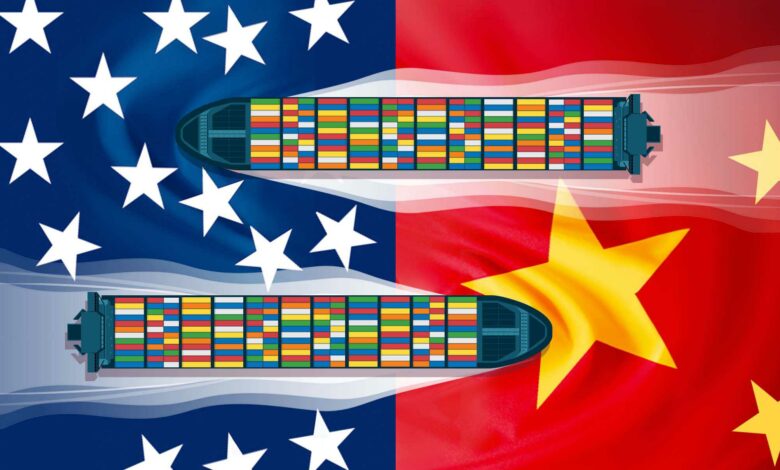
US and Chinese officials sit down this weekend in Geneva for their first official talks to end a grueling tit-for-tat tariff war that imperils hundreds of billions of trade and shook global markets and supply chains.
The United States has imposed tariffs on Chinese imports of up to 145 per cent, with total duties on some products amounting to an eye-popping 245 per cent. In addition to the blanket levies, China has also faced sector-specific tariffs on steel, aluminium and car imports.
Last year’s sales of Chinese products to the United States amounted to over $500 billion — 16.4 percent of the nation’s exports, based on Beijing’s customs figures. Beijing has pledged to resist the measures “to the end” and has announced retaliatory tariffs of as much as 125 per cent on imports of US goods, which amounted to $143.5 billion in the past year, as reported by Washington.
China has complained to the World Trade Organization (WTO) of “bullying” behavior by the Trump administration. And it has targeted US corporations, canceling orders for Boeing aircraft, investigating Google over “anti-monopoly” abuses and joining fashion house PVH Corp. — owner of Tommy Hilfiger and Calvin Klein — and biotech firm Illumina on a list of “unreliable entities.”
Exports of rare earth elements — used to manufacture a variety of goods such as semiconductors, medical equipment and consumer electronics — have also been cut off by Beijing. Beijing has long attracted Trump’s wrath with a trade surplus against the United States of $295.4 billion last year, based on the US Commerce Department’s Bureau of Economic Analysis.
Chinese officials have been unwilling to upend that dynamic. But a more serious trade war would imply China can no longer bank on exports, which set a record in 2024, to support its expectation of robust economic growth this year.
US tariffs also continue to risk hurting China’s thin post-Covid economic rebound as it grapples with a property sector debt crisis and consistently subdued consumption.
The trade war is already hurting the US, with volatility driving a production decline last month and officials citing it for an unforeseen contraction of the economy during the initial three months of the year.