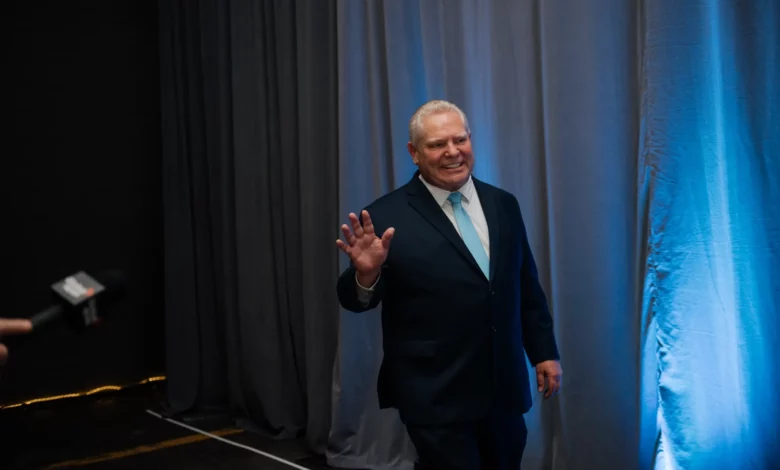
In a historic political twist of fate, Ontario Premier Doug Ford and his Progressive Conservative Party (PC Party) have been re-elected to power, winning their third consecutive legislative majority. The election, held on Thursday, was overshadowed by the trade tensions fueled by U.S. President Donald Trump.
Ford’s election was focused on securing what he referred to as the “biggest mandate in Ontario history” to shield Canada’s most populous province from the impact of Trump’s tariffs. As of Thursday night, the PC Party had captured at least 74 of the 124 seats in the Ontario Legislative Assembly, with leads in seven additional districts, reported the Canadian Broadcasting Corporation.
Following the victory, Ford reiterated his commitment to protecting the people of Ontario, stating, “We’re going to make sure we protect the people of Ontario and protect their families, and their jobs and businesses.” He committed to fighting Trump head-on, stating, “I’ll fight tooth and nail against Donald Trump. I’ll promise you that.”
Throughout the campaign, Ford adopted a tough nationalist stance, often wearing a “Canada is Not for Sale” hat and presenting himself as a defender of Canadian interests. He called the early election over a year ahead of schedule, stating that he needed a greater mandate so he could weather the economic storm ahead with Trump in power. “This is gonna be a battle for the next four years,” he remarked last month.
Ford’s campaign tactic was to make two trips to Washington, D.C., and go on major U.S. networks like Fox News and CNN to debate tariffs and position himself as a voice for Canada. Critics questioned the timing of his election call, noting that the federal government has the lead role in negotiating with the U.S.
Earlier this week, Ford announced plans to impose a tariff on electricity exports to the U.S. should Trump proceed with his trade measures, stating, “I’ll wait to see what happens from there.”
Ontario, which surrounds Toronto and contains approximately 40% of Canada’s population, is heavily reliant on trade with the United States. Over 80% of Ontario’s exports in 2023 were to the U.S., making it one of the most American-consumer-dependent provinces.
The province’s auto industry is a major player, ranking as the world’s second largest following Michigan. It produces vehicles for major brands like Honda, Toyota, Ford, General Motors, and Stellantis. Ontario also boasts one of North America’s largest tech industries, employing around 420,000 people in 22,000 firms.
With trade talks underway, Trump directed a 30-day postponement of threatened tariffs against Canada and Mexico but stated the 25% tariffs would be activated on March 4. He has also suggested the U.S. could make Canada its 51st state because of issues over illegal drug smuggling at the border.