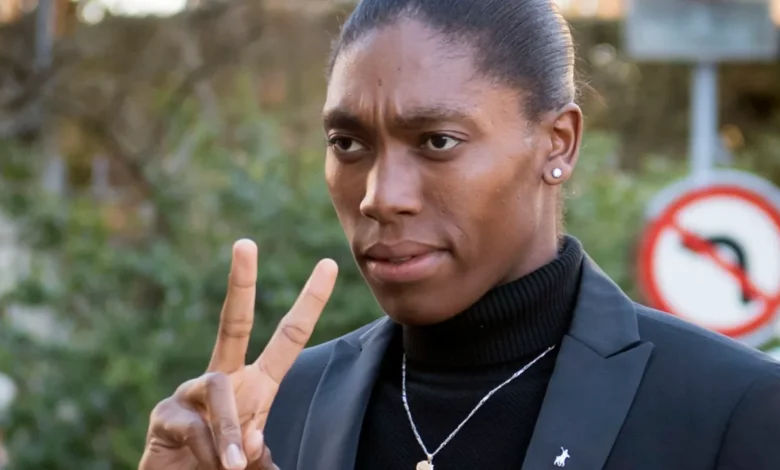
Double 800m Olympic champion Semenya won a partial victory at the European Court of Human Rights (ECHR) in her lengthy court struggle over athletics’ sex qualification regulations.
Semenya, 34, was born with differences of sexual development (DSD) and has not been able to run in the 800m since World Athletics introduced regulations in 2019 capping testosterone levels for track races from 400m to the mile.
The South African middle-distance runner is convinced World Athletics has acted in a discriminatory fashion against runners with DSD by requiring them to lower their testosterone levels to compete. Athletics’ governing body maintains the rules, which in 2023 were extended to apply to all women’s track and field events, to provide fair competition and to safeguard the female category.
Semenya was the Olympic 800m champion in 2012 and 2016. In 2019, she failed to overturn World Athletics’ regulations at the CAS, based in Switzerland. In July 2023, the ECHR ruled in Semenya’s favour in a testosterone case between female athletes.
The ECHR case was not one against sport governing bodies or DSD regulations, but against Switzerland’s government specifically for failing to safeguard Semenya’s rights and traces back to a 2020 Swiss Supreme Court decision.
The Swiss government asked that the issue be taken to the ECHR’s Grand Chamber, which has now ruled that the Swiss decision “had not satisfied the requirement of particular rigour” under Article 6 (right to a fair hearing) of the European Convention on Human Rights.
Judges said the Swiss court’s examination “had fallen short” of that requirement. Yet, the Grand Chamber declared Semenya’s grievances under Articles 8 (right to respect for private life), 13 (right to an effective remedy) and 14 (prohibition of discrimination) inadmissible because they “did not fall within Switzerland’s jurisdiction”.
Since the case involves the Swiss government and not World Athletics, it will not directly influence the existing limits on DSD athletes. Semenya described the ruling as “great for me, great for athletes” as she left the courtroom in Strasbourg, France. This is a reminder to the leaders that athletes need to be protected,” she stated.
“Before we can regulate, we have to respect athletes and put their rights first. Rulings by the ECHR’s Grand Chamber cannot be appealed. Semenya’s case may now be referred back to the Swiss federal court in Lausanne.
Semenya’s lawyer, Schona Jolly, explained that they would take time to digest the decision before a course of action is decided, but told BBC Sport that Semenya “has been vindicated”.
“As of today, the regulation of international sport must sit up and take notice of an athlete’s essential rights,” Jolly stated. It can’t be possible to put this on one side and say ‘the substantive rights of the athlete don’t come into it’. They do very firmly.”