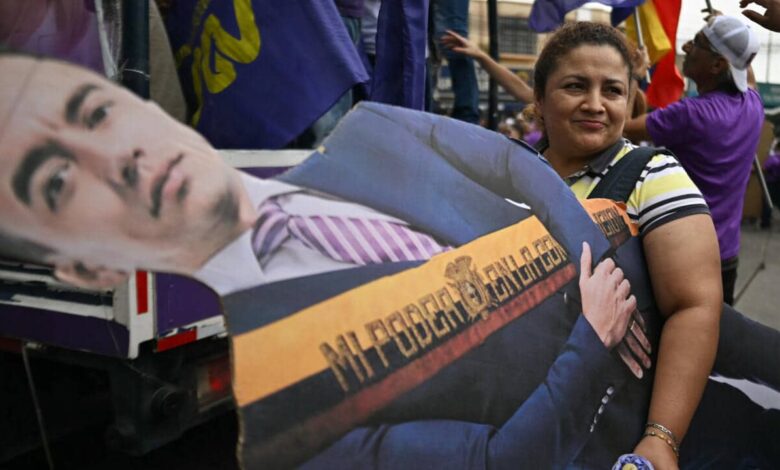
Ecuadorian voters go to the polls Sunday to elect their next president amid a climate of high security concerns and economic woes. Fifteen candidates are in the running for power, among them the hard-right incumbent, Daniel Noboa, who took office just 14 months ago. Noboa-who at 37 years old is the son of a prominent banana magnate-faces a formidable opponent in Luisa Gonzalez, a left-wing legislator and protégé of former President Rafael Correa.
Gonzalez will have to fare far better than his current pre-election polls indicate if he is to dent Noboa’s lead. Analysts explain Noboa’s advantage to a tough “mano dura”, or hard fist, approach to the nation’s skyrocketing violence. A runoff is required if no candidate receives 50 percent of the vote – or 40 percent with a 10-point lead – and would be held April 13.
Campaigns have fought over Ecuador’s wrecked economy and rising violence from powerful cartels, which make it one of the most dangerous countries in the world. Noboa claimed that his deployment of troops into urban areas and prisons has reduced violent deaths by 15 percent and lessened violence inside the prisons.
Opponents counter that much harder action needs to be taken in drug-related crime. Gonzalez would propose military and police operations against criminal activities, the pursual of corrupt judicial officials, and social spending initiatives in the affected areas.
One of the youngest leaders in the world, Noboa had hitched his political future to a hardline stance against crime, declaring a state of emergency and expanding military powers. Nonetheless, human rights groups have sounded alarms over possible abuses under his watch.
The security crisis has also drained the economy, which probably plunged into recession last year. As Noboa sought help from the International Monetary Fund, his opponent reassured voters she also would welcome the IMF’s aid-so long as it doesn’t harm working families.