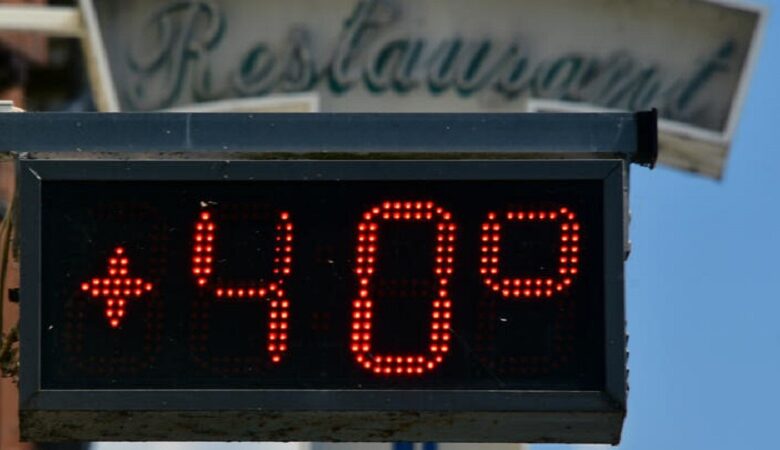
Global temperatures were stuck at near-record highs in April, the EU’s climate monitor said on Thursday, extending an unprecedented heat streak and raising questions about how quickly the world might be warming.
The extraordinary heat spell was expected to subside as warmer El Nino conditions faded last year, but temperatures have stubbornly remained at record or near-record levels well into this year. And then 2025 arrives, when we ought to be settling back, and we are stuck at this step-change in the acceleration of warming,” said Johan Rockstrom, head of the Potsdam Institute for Climate Impact Research.
“And we appear to be stuck there. What this is caused (by) — what is explaining it — is not fully settled, but it’s a very alarming indication,” he said to AFP. In its most recent bulletin, the Copernicus Climate Change Service reported that April was the second-warmest in its records, which use billions of measurements from satellites, ships, aircraft and weather stations.
Twenty-one out of the past 22 months were above 1.5 degrees Celsius above pre-industrial levels, the warming threshold inscribed in the Paris Accord, beyond which significant and persistent climate and environmental change becomes more probable.
Most scientists think this goal can no longer be achieved and will be exceeded within a few years. One of the biggest studies ever by dozens of leading climate researchers, not yet peer-reviewed, recently concluded that global warming hit 1.36C in 2024.
Copernicus estimates the current level at 1.39C and estimates 1.5C may be achieved in mid-2029 or earlier based on recent warming rates over the past 30 years. Now it’s four years. The truth is we will be over 1.5 degrees,” said Samantha Burgess of the European Centre for Medium-Range Weather Forecasts, which operates Copernicus.
“The key thing is then not to grab on to two degrees, but to target 1.51,” the climate scientist said to AFP. Julien Cattiaux, a climatologist at the CNRS research institute in France, stated that 1.5C “would be beaten before 2030″ but that didn’t mean people should lose hope. The numbers we’re providing are indeed terrifying: the actual warming rate is significant. They say every 10th of a degree makes a difference, but currently, they’re going rapidly,” he explained to AFP.