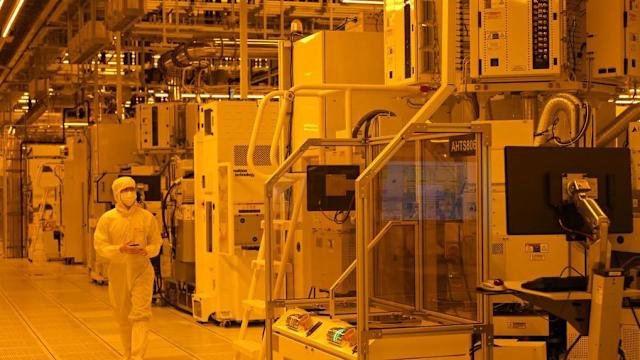
Tan Yew Kong, an employee of one of the globe’s biggest chipmakers, says his organisation is a tailor shop – it tailors chips to suit clients’ requirements. We give you the material, we give you the cufflinks and all. You show us what you want, what you like, the design you like, and we produce it for you,” says Mr Tan, who oversees GlobalFoundries’ Singapore operations.
These days, the company is also adapting its future to fit around the unpredictable tariff policy of US President Donald Trump. Companies and nations have been making concessions to placate Washington before 9 July, when the 90-day delay on Trump’s steep “Liberation Day” tariffs expires. And again, no one is quite sure what will happen next.
The president announced on Friday that the US government will begin issuing letters with information about higher tariff rates effective from 1 August. He explained that up to 12 such letters will be issued within the next few days, and the levies will go from “60% or 70% tariffs to 10 to 20% tariffs”, but refused to mention the countries they would be addressed to.
Currently, semiconductors are tariff-free, but Trump has made threats of levies on them numerous times, and that volatility is making it almost impossible for companies to make plans. Also, last week, Bloomberg News reported the White House is set to further impose controls on artificial intelligence (AI) chips by limiting shipments to Malaysia and Thailand to stem suspected smuggling of the technology to China.
The US Commerce Department refused to comment at short notice on a BBC request. You can’t “flip the switch every other alternate week or day. That makes it very difficult for businesses to plan long term”, says Mr Tan. US-based GlobalFoundries is commissioned by some of the world’s largest semiconductor designers and manufacturers – AMD, Broadcom, Qualcomm – to produce their chips.
Its business is dispersed globally, with numerous offices in Asia, ranging from India to South Korea. It has just announced increased investment to the tune of $16bn (£11.7bn) after demand for artificial intelligence (AI) hardware took off.
In order to safeguard that widespread reach, the company has also promised to cooperate with the Trump administration to relocate parts of its chip production and supply chain to American soil. Chip makers, textile manufacturers and auto parts suppliers – whose close-knit supply chains extend through Asia – are scrambling to deliver orders, reduce expenses and acquire new customers as they navigate a troubled market.
“Companies must rethink buffers, building their inventory and lead times to build in volatility,” said Boston Consulting Group’s Aparna Bharadwaj. She says this might open up new opportunities, though, and also affect their competitiveness and market share in some nations. That is, it’s difficult to say.