Despite being the most sanctioned nation on the planet, Russia has not stopped using its enormous wealth of energy to finance its war in Ukraine. US President Donald Trump wants to put an end to that. He has threatened to impose sweeping new secondary tariffs on any nation still engaging in trade with Russia if a ceasefire with Ukraine is not agreed by Friday, 8 August.
Secondary tariffs would impose a 100% duty on goods from any nation that trades with Russia upon their import into the US. Russia’s largest exports are oil and gas, and Moscow’s largest buyers are China, India and Turkey.
“I used trade for a lot of things, but it’s great for settling wars”, Trump said last month. This would not be the first time the Trump administration has levelled secondary tariffs, which also exist to punish consumers of Venezuelan oil.
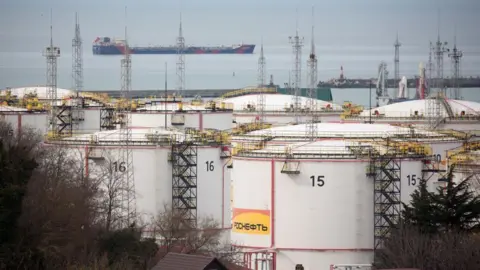
But applying them to Russia would have much greater consequences for the world economy. Russia is the world’s third-largest oil producer, after Saudi Arabia and the US itself. But its exports have been declining this year, according to a Bloomberg analysis of tracking data on ships.
“The most important channel through which secondary tariffs on Russian energy purchasers would affect the global economy would be the level of energy prices,” explains Kieran Tompkins of consultancy Capital Economics.
If successful, the tariffs will reduce the supply of Russian oil and gas to international markets. And with reduced supply, the prices may rise, as happened when Russia invaded Ukraine in 2022. That spurred a worldwide inflation surge. President Trump assures that he is not concerned due to a record US oil production.
Mr Tompkins mentions that, this time around, there are also other factors to indicate the effect on prices would not be as pronounced. He says that “the current backdrop is one where OPEC+ [the group of major oil-producing nations and their allies] have substantial spare capacity to draw upon.”
Russia has come up with an entire system to get around current sanctions, which would be helpful for assisting its trading partners to escape the secondary tariffs threatened by Trump.
For instance, its so-called “shadow fleet” – comprising hundreds of tankers with murky ownership – might be utilised to cover up the source of exported Russian oil and gas.
“Maintaining sanctions is as large a job as imposing sanctions in the first place,” US sanctions expert Richard Nephew at Columbia University estimates. Because the party being sanctioned makes efforts to circumvent them.”
Ever since the all-out invasion of Ukraine in 2022, India has been the second largest purchaser of Russian oil, the Centre for Research on Energy and Clean Air says.
“They’re funding the war machine. And if they’re going to do that, then I’m not going to be happy,” President Trump said to US news outlet CNBC on Tuesday. If the secondary sanctions are applied, American companies purchasing items from India will be required to pay a 100% import tax – or tariff – when the items arrive at US ports.
The concept is that it makes them so costly that US companies will prefer to purchase them more cheaply somewhere else, which means lost business for India.
That, in turn, is intended to discourage India from purchasing Russian oil. And if Russia is left with no choice but to sell its oil elsewhere because other nations have the same dilemma, it will have fewer dollars to fund the war in Ukraine.
Another way Americans might see higher prices due to new secondary tariffs is in their buying of cell phones from India. India refers to Trump’s threat of tariffs over Russian oil as ‘unjustified’
US company Apple is transferring much of its iPhone manufacturing to India – specifically the production of handsets it wishes to sell in the US.
If these items fall under the new tariffs, US consumers could see prices double. That is because tariffs are paid by firms that bring goods into the country – and those firms pass most, if not all, of their increased costs on to buyers.
US imports from India are already subject to a 25% tariff as part of President Trump’s wider trade shake-up, and he indicated to CNBC that the figure could be increased “very substantially. India’s government has accused the US of hypocrisy, referring to Washington’s ongoing trade with Russia.