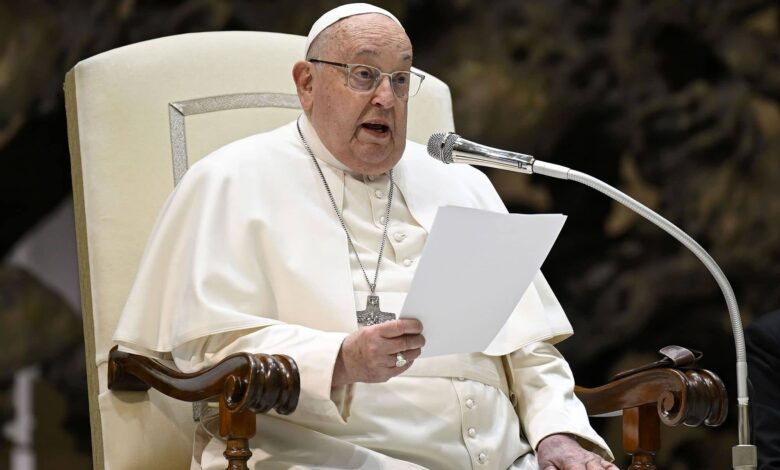
Pope Francis has died, the Vatican announced in a video message. The Roman Catholic Church’s first Latin American leader passed away on Monday at 7:35 AM (05:35 GMT) at the age of 88, according to Cardinal Kevin Farrell via the Vatican’s Telegram channel.
His passing triggers a process to name a new spiritual leader for the world’s some 1.4 billion Catholics. Throughout his 12-year papacy, Francis battled many health problems, recently with intense complications of a double case of pneumonia that forced him to spend 38 days in a Rome hospital.
The announcement comes just a day after the Pope made a brief public appearance during the Easter Sunday Mass, addressing thousands of pilgrims in St. Peter’s Square and offering his final blessings. Concerns about his health had intensified in recent days, particularly after he visited a prison in Rome against medical advice following his discharge from the hospital on March 23.
Al Jazeera’s diplomatic editor James Bays reported from Rome, describing the shock that would have been felt by most. “A carefully choreographed procedure comes after the death of a pope. But the initial response will be one of incredulity,” he said, referencing the Pope’s insistence on being close to the people just hours before his death.
After a pope’s death, the corpse is locked in his apartment to avoid unauthorized entry, and no autopsy is conducted. The papal ring is ritually broken before witnesses, and a funeral mass is usually conducted between four and six days later. A papal conclave of cardinals who are under the age of 80 is supposed to take place 15 days after the death of the Pope to vote on his replacement. The election of the new pope will be announced from the balcony of St. Peter’s Basilica, which will be his first public outing.
Born Jorge Mario Bergoglio, he became pope on March 13, 2013, catching many off guard who considered the Argentinian cleric, who prioritized social justice, to be an outsider. His papacy was a radical departure from that of his predecessor, Benedict XVI, centered on reaching out to the poor and building relationships with common people.
Eulogies flooded in after his passing, with French President Emmanuel Macron extolling Francis for standing up to the weak and for fighting for justice. Irish Prime Minister Michael Martin noted the Pope’s dedication to compassion, peace, and human dignity during his time in office.
Famous for encouraging international peace and interfaith dialogue, Francis paid significant visits, such as a pilgrimage to South Sudan in 2023, and appealed for the end of the “absurd and cruel war” in Ukraine. In his final public sermon on Easter Sunday, he appealed for a ceasefire in Gaza and the release of Hamas hostages.
His reign was characterized by strong advocacy for the poor and marginalized, such as migrants and the victims of climate change, which he referred to as a crisis brought about by man. He also was strongly against the death penalty and classified nuclear weapon possession as immoral.
Though his liberal approach was met with both praise and criticism, especially on issues of LGBTQ inclusion and traditional church doctrine, he was confronted with serious challenges, such as a botched clergy sex abuse case in Chile that reopened old wounds from previous scandals. His worsening health had increasingly become apparent, with a string of surgeries and illnesses affecting his capacity to lead.