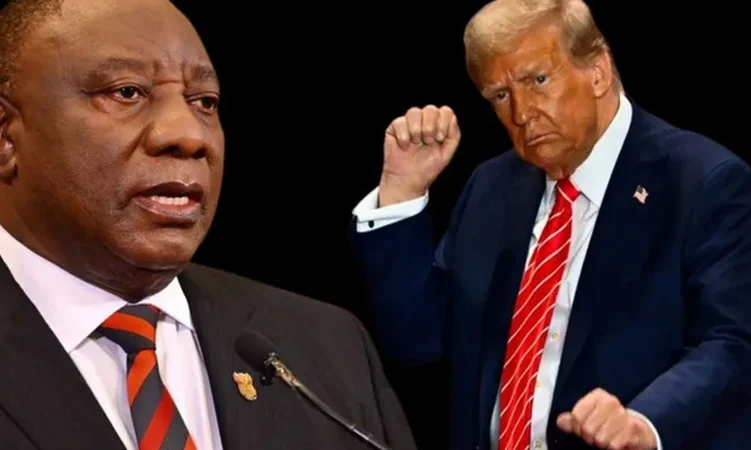
Pretoria explains the visit is to ‘reset’ relations with Washington, following the US taking in dozens of white Afrikaners as refugees. South African President Cyril Ramaphosa will be meeting United States President Donald Trump at the White House next week in a bid to “reset” relations between the two nations, Pretoria stated.
The reported trip follows the US this week taking in dozens of white Afrikaners as refugees, after widely discredited claims by Trump that “genocide” is being carried out against white farmers in the majority-Black nation. President Ramaphosa will meet with President Donald Trump at the White House in Washington, DC to discuss bilateral, regional and global issues of interest,” South Africa’s presidency said in a statement on Wednesday.
“Such a visit offers an opportunity to renew the strategic relationship between the two nations,” it said, adding the visit will run from Monday to Thursday and the two leaders will hold a meeting on Wednesday. The White House had nothing to say at the meeting, which will focus on being Trump’s first with the head of an African state since his return to office in January.
Relations between Pretoria and Washington have deteriorated considerably since Trump’s return to the White House. Trump has lambasted Ramaphosa’s administration on several fronts. Last month, he signed an executive order withdrawing all US funding to South Africa for reasons of disapproval of its land reform policy and its case of alleged genocide at the International Court of Justice (ICJ) against US ally Israel.
Trump’s executive order also proposed accepting and resettling individuals from the minority Afrikaner group, whom he claims are being killed and persecuted due to their race – allegations refuted by experts and South Africa’s government. Afrikaners trace their ancestry to predominantly Dutch colonizers who ruled the apartheid government for close to half a century.
Pretoria insists there is no proof of persecution of whites within the nation and Ramaphosa has stated the US government “has got the wrong end of the stick”, as South Africa as a whole suffers from the issue of violent crime, not necessarily by race. The US criticism also seems to be aimed at South Africa’s affirmative action legislation promoting the lot of the majority-Black population, who were marginalized and disenfranchised under apartheid.
A new land expropriation act provides the government with the authority to expropriate land in the public interest without compensation in exceptional cases. Even though Pretoria insists that the legislation is not a confiscation bill but rather a description of idle land that can be reallocated to the benefit of the general public, some Afrikaner organizations claim it could provide scope for their land being redistributed to some of the Black majority in the country.