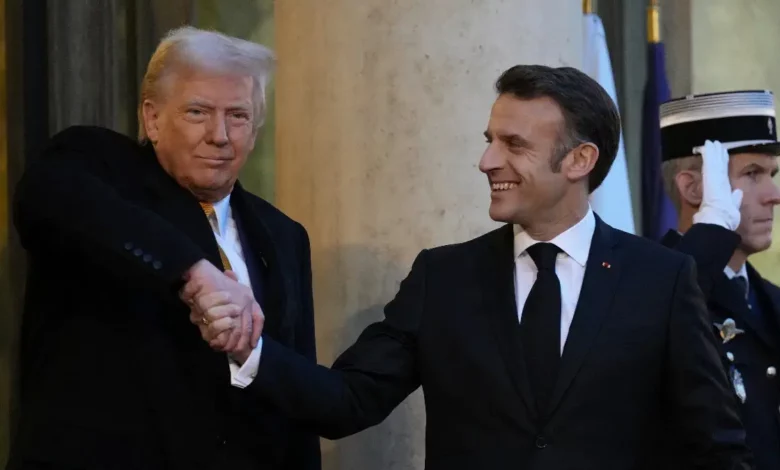
United States President Donald Trump hosted French President Emmanuel Macron at the White House on Monday for talks focused on Ukraine, European security, and trade. Macron’s visit was the first of a European leader since Trump began his second term on January 20, and it came at a time when tensions between Europe and the US were heightened over security issues and the war in Ukraine.
The relationship between Macron and Trump has evolved with time, dominated by friendly gestures and reciprocal admiration. Trump welcomed Macron in the Oval Office calling him “a very special man,” while Macron used a similar friendly tone in even the periods of disagreement between the leaders over fundamental issues.
Macron later had no hesitation at all in interrogating Trump on the war against Ukraine and matters related to trade. He reiteratively pointed out that there was no finishing of the conflict possible without respecting the sovereignty of Ukraine, rubbishing a chance for peace with a “weak agreement” or “capitulation.”.
Macron also cut Trump off in mid-sentence to correct the economic aid provided to Ukraine, claiming that Europe had been a major contributor, explaining, “we paid 60 percent of the overall effort,” in the form of loans, guarantees, and grants.
On the trade front, Macron advocated for “fair competition” to foster prosperity on both sides of the Atlantic and cautioned against surging tariffs threatened by Trump. He underscored that the US should cooperate with Europe rather than creating economic tension, especially in the context of the ongoing trade war with China.
The French president saw Trump’s concern over the undue burden of the security responsibility being put on Europe by the US. The two presidents discussed whether or not to deploy a European peacekeeping mission to Ukraine, with Macron reaffirming that the mission would not engage in front-line fights but would be essential in ensuring peace.
Trump also insisted again that Ukraine give up its rare minerals in the terms of a potential aid package, declaring that the US is near agreement. Macron had tentatively supported the deal, however, with enthusiasm for Trump’s joining the mineral deal.
The sit-down was a moment when there were different views regarding Russian President Vladimir Putin, with Trump preferring to pursue a more conciliatory approach and Macron unequivocally identifying Russia as the aggressor in the war. In response to queries regarding Putin, Trump declined to call him a “dictator,” reflecting a desire to keep diplomatic channels open.
During the negotiations, the dynamic between the two presidents indicated the sophistication of international politics and the challenges to be encountered regarding security and economic relationships.