US President Donald Trump is weighing whether to join Israel’s attacks on Iran’s nuclear facilities, as the conflict enters its sixth day and incensed rhetoric escalates among all parties. US attacks might mean employing advanced weapons to target an underground nuclear facility at Fordo, five sources told BBC’s US partner CBS News.
The president convened his national security advisors on Tuesday to discuss future action. Israel and Iran have been trading lethal blows since Friday. Analysts interpret Trump’s words as embracing joining the Israelis, even though he called for de-escalation last week and loudly advocated for a diplomatic solution to cap Iran’s nuclear research.
He has become more and more frustrated with what he sees as a lack of progress in reaching a new agreement that would be focused on keeping Iran from developing a nuclear weapon. Trump withdrew from an earlier agreement with Iran in his first term.
Trump threatened Iranian Supreme Leader Ali Khamenei in a tweet on Tuesday and stated the US knew where he was. He is an easy target, but safe there,” Trump posted. “We are not going to take him out (kill!), at least not now. But we do not want missiles fired at civilians, or American troops. Our patience is thinning.”
Trump posted another simply stating: “UNCONDITIONAL SURRENDER!” On Wednesday, Iran’s supreme leader responded to the posts directly and stated the nation would never surrender. Any US military intervention of any kind will certainly be received with irreversible damage,” Khamenei stated.
“Wise people who are familiar with Iran, Iranians, and Iranian history never address this nation in the tone of threats, because Iranians are not those who give up,” he continued. The US has demanded that Iran abandon its uranium enrichment to stop the country from pursuing nuclear weapons – though Iran maintains its nuclear endeavours are purely for peaceful purposes.
Trump withdrew from a prior nuclear deal between Iran and five other global powers in 2018. Following his return to power, he sent negotiators to attempt to find a new deal with the Middle Eastern country, without a result.
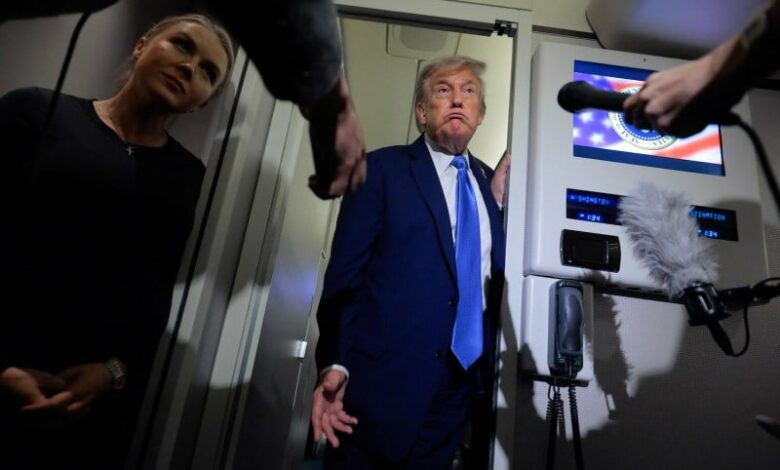
Trump seems to have cooled toward old-fashioned diplomacy in recent days. On Tuesday, en route back from a G7 gathering in Canada, he stated that he was “not too much in the mood to negotiate with Iran.”.
Trump’s agitated words suggested he was crossing a point that would be “very hard to row back from”, said Professor Amnon Aran, an Israeli foreign policy expert, to BBC Radio 5 Live. We’re certainly as close as we’ve ever been” to a US involvement in the war since it started, he added.
Other analysts predicted Trump would be pushed to act. Michael Oren, a former Israeli ambassador to the US, predicted the president would feel he would have little option but to step in if Iran attacked an American ship or base.
But the attack could also be an Iranian ploy to encourage Trump to pressure Israel into negotiations to bring an end to hostilities, Mr Oren said on BBC Radio 4’s Today programme.
Trump himself informed journalists on his return from the G7 that his aim was “an end, a real end, not a ceasefire”. His remarks were made just hours after he along with other Western leaders issued a statement calling for de-escalation in the Middle East.
Trump departed early from the summit to deal with the crisis from Washington before a series of comments left onlookers unsure which direction he would ultimately decide to follow. A call for Iranians to flee Tehran also brought about a spate of speculation, along with tension in the Iranian capital itself.