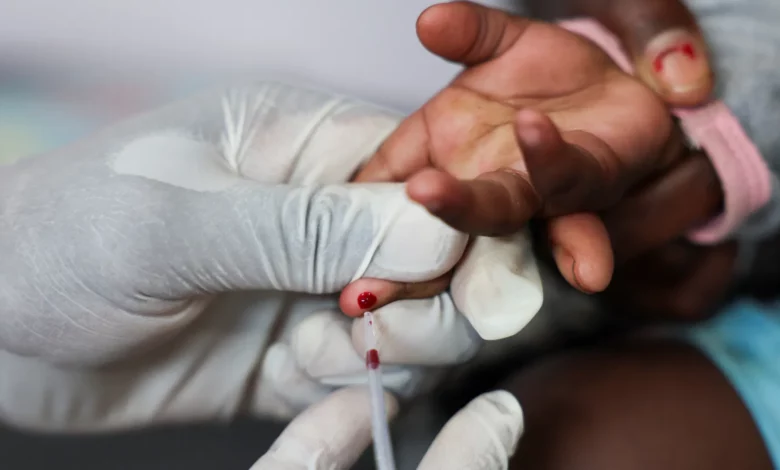
The United Nations 2025 Global AIDS Update states that if funding is not replaced, Trump’s cuts could reverse ‘decades’ of HIV/AIDS progress. If funding is not replaced, the suspension of foreign aid by the US President Donald Trump’s administration could reverse “decades of progress” on HIV, the United Nations reports in its 2025 Global AIDS Update.
The US decision to cut the US President’s Emergency Plan for AIDS Relief (PEPFAR) would lead to six million additional HIV infections and four million additional AIDS deaths by 2029, the 2025 Global AIDS Update report published on Thursday indicates.
HIV programmes in low- and middle-income nations have been shaken by unexpected, large-scale financial shocks that risk undoing decades of gains in the HIV response,” stated the UNAIDS report. Conflicts and war, increasing economic inequities, geo-political changes and climatic shocks – the sort never seen in the global HIV response before – are fanning volatility and stressing multilateralism,” it continued.
Based on the report, individuals who were contracting HIV and those who died due to AIDS-related factors were at their lowest in “more than 30 years. But towards the end of 2024, the reduction in numbers was “not sufficient” to put an end to AIDS as a public threat by 2030. In new cases of infection, there was a 56 per cent fall in sub-Saharan Africa, where half of all individuals who “acquired HIV in 2024” reside.
“Five nations, predominantly from sub-Saharan Africa, were to reach a 90 per cent reduction in new infections by the year 2030 compared to 2010,” said the UN. But the impact of Trump’s reduction to the programme is enormous since the US was the biggest donor of global humanitarian aid.
The abrupt pull-out of the largest contributor to the global HIV response threw treatment and prevention programs worldwide into disarray,” the report stated. Although numerous countries still possess sufficient life-saving antiretroviral medications and clinics that cater to the most at-risk population, such as gay men, sex workers and adolescent girls, the reduction in funding has led the facilities to shut down and prevention programs to wither away.
UNAIDS Executive Director Winnie Byanyima explained to the Reuters news agency that “prevention was hit more than treatment” by the cuts. Key populations were the most affected … they relied on specialised services by community leaders, and those were the ones to be cut first,” Byanyima stated.
But even before Trump decided to cut back the support a short while after entering office in January, donors, predominantly European nations, were reducing development assistance. They’ve said that it has to do with defence spending,” she said, noting that numbers indicated “global health [spending] peaked and then it also started falling with the Ukraine war”.
PEPFAR was introduced by US President George W Bush in 2003, and is the largest-ever donation by any nation dedicated to a single disease. UNAIDS referred to the program as a “lifeline” for nations with high HIV prevalence.